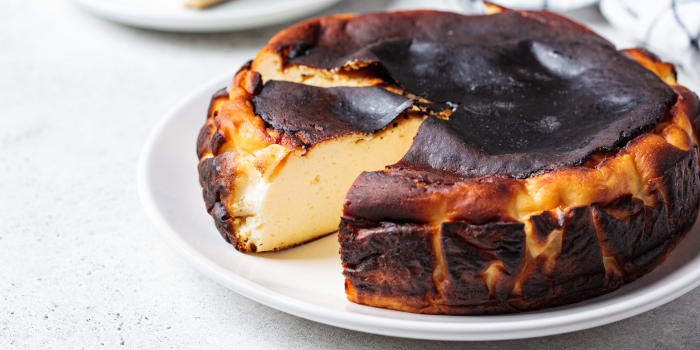
The baker, painter, the candlestick maker. The fixer, the writer, and even the builder, have all faced failure. No matter if the job has been done hundreds of times, it is inevitable that even the most experienced professional will find themselves eye to eye with defeat at some point along the way.
You use the same recipe, components, and techniques that have proven successful time and time again, yet the cheesecake is cracked, the paint is streaky, the flooring is creaky, and the fresh rebuild is leaking like a politician who's been named in a scandal.
Now that baking season is behind us, not only can I break out the grill, but I can take a moment to look back through my photos of 2025 baked goods. Not one to toot my horn, but I have been called a pretty darn good cheesecake maker. I was challenged this past holiday season to whip up a classic, but also something new and blue. My bonus son requested a copycat version of a delectable treat he indulged upon while we were on vacation.
Blueberry Lemon Cheesecake. I had no idea where to start, and none of the online recipes were close enough to what we had been blessed with while visiting the magical land of the mouse.
I said to myself, “Sari, you can do this, it’s the same, just a little different”. So I set out on my adventure. I invested time and effort, the best ingredients I could find, and a little more creativity than usual. It was a hit. It was beautiful, with its lemon cookie crust, vibrant blue filling, and a garnish of freshly made candied lemon peel. No cracks. No brown edges. She was one for the record books.
The standard, classic, go-to, tried and true plain cheesecake was a disaster. The middle was too soft, the edges were overdone, the gaping lightning bolt crack down the middle was too substantial to hide with a can of fruit. Rather than it being a staple on the holiday desert spread, it was an abomination that begged to be hidden.
I couldn’t figure out what went wrong. I had done this a hundred times. As the season moved on and I got the itch to bake, I vowed to reclaim the cheesecake throne. As I gathered my supplies and prepared to set off on my journey, I found myself analyzing the steps that previously led to my (cakes) demise.
As makers, fixers, and builders it is extremely difficult to find the root cause of failure until you can pinpoint what could have changed that would have a negative impact on your intended outcome.
What aspects do we have to evaluate, as creators, when something turns out to be a flop?
The Ingredients: Maybe it was the store brand cream cheese, but I’ve had good luck with it before. My eggs may have been too cold or too old, but I’m pretty sure they were the right temperature and well within their expiration date. As makers, we are at the mercy of our suppliers. Not all quality issues are visible to the naked eye. Whether it be a new batch of seals that leak 70% of the time, or frictions that are prone to premature failure, looking into component change is the most logical place to start when trying to figure out why something that has always worked, isn’t. If you can identify and then test your suspicion, you are one step closer to digging out of a potentially ongoing problem. Remedying a sole component factor can be as immediate as finding an alternative.
The People and the Process: I was probably distracted, overwhelmed with a never ending to-do list that seemed to grow by the minute, or rather by the request. By the time I had removed my beautiful blue piece of art from the oven I had lost all umph to commit to another seventy-five minutes of oven time. I was rushed and may have cranked the mixer too high in my haste to complete the job. I may have even stomped on the floor out of frustration at the dogs that simply would not stop barking at imaginary cars. People are the most unreliable part of the production process, yet the most impactful and necessary. When a pattern of failures becomes obvious, and not narrowed down to a change in other resources, identifying human error, observing, and training (or retraining), can be the solution that takes your product from trashed back to top notch.
External and Environmental Factors: Was my oven not reading the correct temperature? Possible, as the dangly thermometer that ensures accuracy was sitting on the counter top outside of the oven unable to serve its sole purpose. Our tools are only as good as the hands that manipulate them, and the maintenance that they are provided. Torque wrench out of spec, there’s a leak. Dyno program reporting incorrectly, welcome to shifting issues out of the box. Young speed demon that loves mud and off-roading, say goodbye to your stock build. Take the time to ensure that the equipment is well maintained. And always cover your rear by communicating clear expectations with your customers, as you can only control what happens within the confines of our own workspace.
As I moved through experimenting to find the root cause of my baking demise, I ruled out cheaper ingredients (store brand for the win), and distraction (the dogs are still barking), and have settled on equipment failure. The hanging thermometer is back in its place, and to my surprise the newer fancy ovens temperature is off by twelve degrees, just enough to cause those despised cracks.
Instead of chalking it up to bad luck, or resorting to a “crap happens” mentality, taking the time to evaluate the root cause will lead you to a profitable, and in my case, delicious future of quality products.


